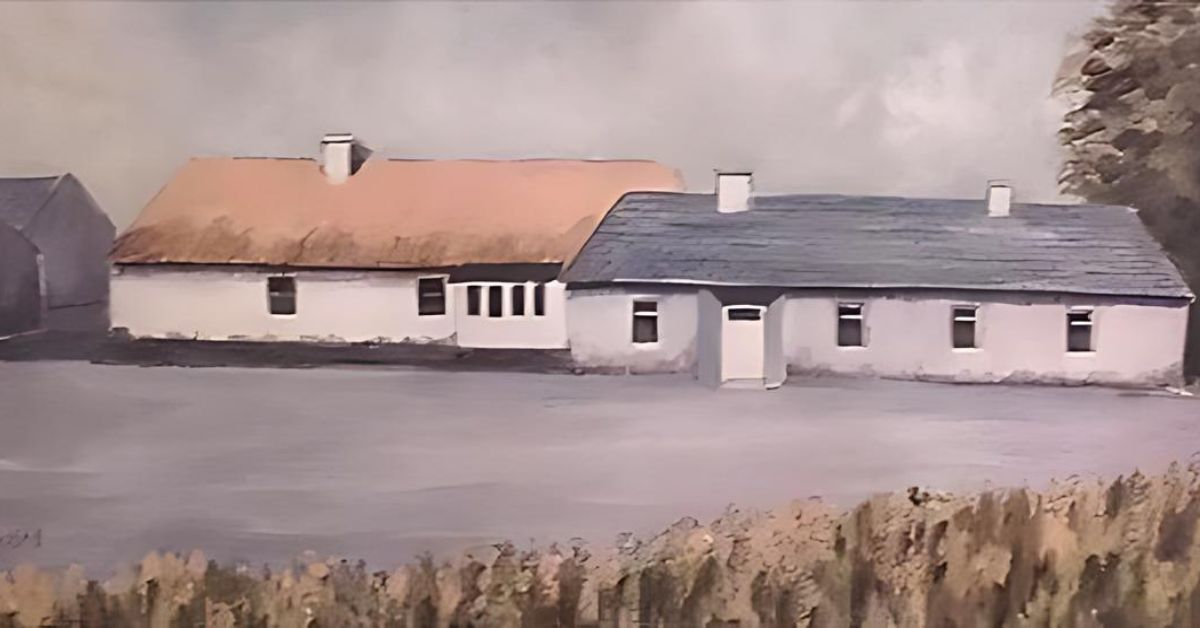
Whites pub in Ballyduff used be black
Chequered history of Ballyduff Lower pub
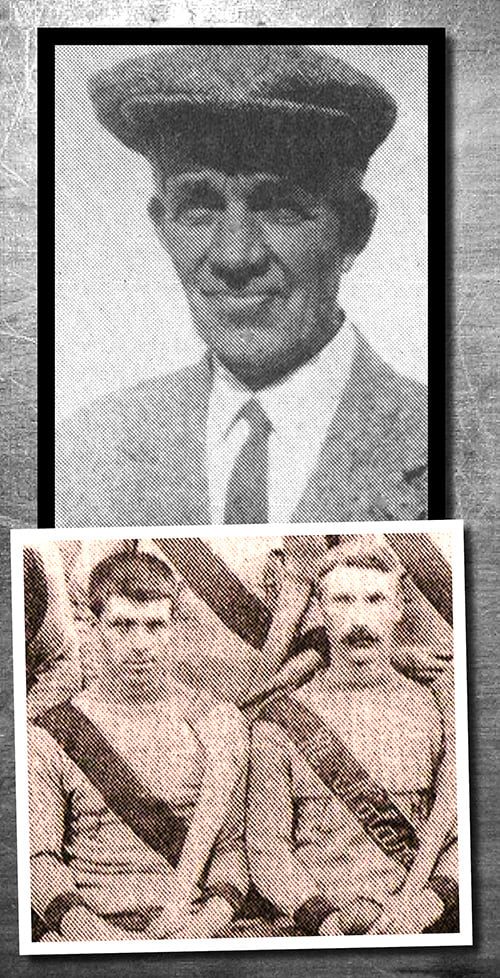
Having been a household name in Waterford as a sportsman, over a span of four decades Stephen White ran a thriving spirit and grocery business in Ballyduff Lower, a little village a bit off the beaten track, but not beyond the long arm of the law.
Born in 1882, he was the youngest son of James White, Portlaw and Mary (Gough), Kilmagemogue, Kilmeaden. His parents had married three years before and took over the farm at Mary’s homeplace.
Stephen’s brothers, Pat and Tom, farmed at Kilmagemogue (later O’Regans) and their father’s native Knockane respectively. One of them was known as ‘The Bullock White’.
They had two sisters, Nellie and Catherine. Kay, the eldest of the five, married Tom Nolan, Oldcourt, captain of the Ballyduff team that represented Waterford in the first All-Ireland Football Championship in 1887. After he died, she married Kilkenny man Denis Fielding, one of the main founders of Kilmeaden Co-op.
Stephen was twenty-two when he played on the team that won Ballyduff’s first county senior hurling title in 1906. A doughty defender, he was a close ally of that side’s captain, Matt Nolan, Lacka Road, and another team member, Ambrose Madders.
A teacher in Ballyduff, Amby became headmaster in 1919. He was also a Gaelic Games administrator and general community activist and one of the few people in the area with a car just after WWI.
Being committee colleagues in the local GAA club, he and Stephen (who was a grade-A referee) drove around together to matches and meetings. The dynamic duo even organised a major race meeting for horses and ponies in Kilmeaden on New Year’s Day, 1920.
Kirbys
Stephen farmed land at Carriganure, where his acquaintances included Nicholas Phelan and Nicholas Cummins. He often went beagling with the likes of the Powers (The Castle) and Johnny Aulsberry.
In the summer of 1919, his father bought what had long been Kirbys’ public house in Ballyduff, together with eight acres in front of the Church, for 1,100 guineas. The Kirby sisters, Maggie and Mary, Amberhill, had inherited it from their parents (Nicholas and Mary) and also operated a bakery there.
Stephen’s mother died in 1922 and he took over the pub soon after. Helping him behind the counter was his wife, Frances Delahunty, a farmer’s daughter from Ballygunnertemple. His sister-in-law Alice came over and lived with the couple.
Whites had a busy trade going between and after the wars and kept the place well. Noel Larkin remembers standing at the postbox on the corner one day after school back in the late forties and seeing Stephen on the roof of the pub, thatching away.
‘”Who told you you were able to thatch?” I shouted up at him, joking. Well, if Stephen didn’t come down the ladder like a shot – needless to say, I ran like the clappers!”
He mightn’t have been in the best of humour. A new guard in the area was beginning to make life awkward, namely the ‘persistent’ Morgan McGarry who arrived from Ferrybank in February ’49. The Corkman quickly earned a reputation for going out of his way to nab vintners and drinkers in an area festooned with pubs.
Clocked
Late that summer, McGarry ‘copped’ sixteen men supping in Whites at half-one on a Sunday afternoon. He told Tramore District Court how he’d gone to first Mass that morning, in uniform, before heading home and changing into his plain clothes. He then left his bicycle in a field and snuck down to the pub through a crop of wheat, where he ‘lay in ambush’ before coming in the back way.
He denied entering via a bedroom window and couldn’t recall Mrs White telling him that most of the men she’d let in were harvesters, though he supposed they could well have been.
Though his solicitor cited Whites’ 25-year unblemished record, Stephen had received a conviction in 1929 for a breach an hour past closing, which he put down to being at the Devotions. ‘You could do with less of that sort of extra piety and pay more attention to the law of the country,’ scolded the judge.
Here, twenty years on, a £1 penalty was imposed, with the customers fined 2/6 each. However, a conviction was not recorded. Garda McGarry had another ‘cut’ in 1950: accessing the rear entrance once more twenty minutes before Sunday opening and finding three Kilmac’ workers with bottles of stout.
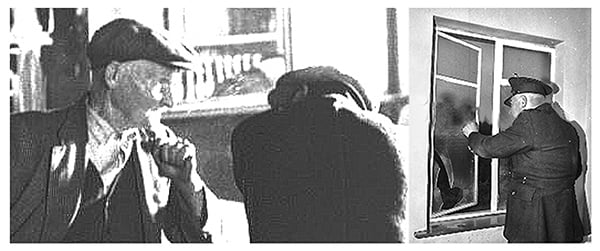
Though the defence called it ‘a fair catch’, the judge held that Garda McGarry’s confrontational conduct (he’d grabbed the kitchen clock from Stephen’s grasp in case he tried to move the hands forward) showed ‘you have a sense of personal grievance against this man’. He let the publican off.
In early ’51, McGarry was transferred from Kilmeaden to Ballinamult. A Kerryman, Garda Daniel Donoghue, moved in the opposite direction. Dan’s departure was ‘learned with much regret’ in West Waterford, ‘where he was a great favourite’; the locals sensing perhaps that ‘harvesting’ there was about to be curtailed. A talented banjo player, Donoghue, unsurprisingly, proved much more popular than his predecessor during his short stint in Kilmeaden, before being reposted to the City and then Mooncoin.
Able to see out his days in the business in peace, Stephen White only had a couple of years’ retirement before he died, aged seventy-four, in August ’56, being laid to rest in the family plot at Portlaw.
Liscoes
By then the pub was called Liscoes and on the skids. Bachelor farmer Peter Liscoe from Dunleer, Co. Louth bought Whites in March ’54 and renamed it. It’s fair to say he was regarded as a bit of an eccentric.
Letting his lands near Drogheda, Peter had an interest in a pub in Thurles before he came to Waterford. He drove a station wagon and liked Tullamore Dew whiskey; not an ideal combination.
Liscoe made a “bad start” as a barkeeper in Ballyduff (“a district conducive to a bad start,” observed his solicitor) when nine farmers and farm labourers were found drinking after-hours. It wasn’t a one-off by any means and when he applied for the renewal of his liquor licence in late 1957, the State objected. The judge noted his last licence had expired over two years previously.
Peter died in August, 1959 in Ballyduff and was buried five miles in the Cork Road in Ballinaneeshagh cemetery, with his brother and sister among the small funeral congregation.
Stephen’s widow passed away in October of 1961 (three years after Alice), having reached the same age as her husband. Returned to Ballygunner, her appealing traits of character and charitable disposition were warmly remembered by their many customers.
The same couldn’t be said when, having left the force, civilian Morgan McGarry died suddenly in Wexford six years later.
Top image: The former pub in Ballyduff, where the school car park is now. It had a thatched roof in Stephen White’s time. [Picture originally per James Carlin, with thanks]
Post Comment