Dead in the water: WWI souls lost at sea
BEING a maritime county, it’s not surprising that significant numbers from Waterford lost their lives at sea during the First World War. Many Allied ships were sunk around the coast of Ireland, others in uncharted waters.
All, together with those who died on dry land, are collectively commemorated on the Waterford Memorial, an impressive inscribed monument to the 1,100 men and women from the city and county claimed by WWI.
The Battle of Jutland between the British Grand Fleet and German High Seas Fleet on May 31st, 1916, was a major engagement with such a confusing outcome that both sides felt entitled to claim victory. The British Navy had a total of 151 ships in action compared to 99 on the German side. During the battle — which influenced Germany to introduce unrestricted submarine warfare — 15 British ships were lost, with 6,024 sailors killed, while on the enemy side 11 ships and 2,507 sailors perished.
Ten Waterford men died that day – namely, James Coughlan, James Daley, Daniel Day, James Founds and Michael Mulcahy, who went down with 1,012 others on the H.M.S. “Indefatigable”; and Thomas Carlton, Joseph Hogan, Stephen Power, William Ryan and Edward Wallace, all lost, along with almost 900 others, on the H.M.S. “Defence.”
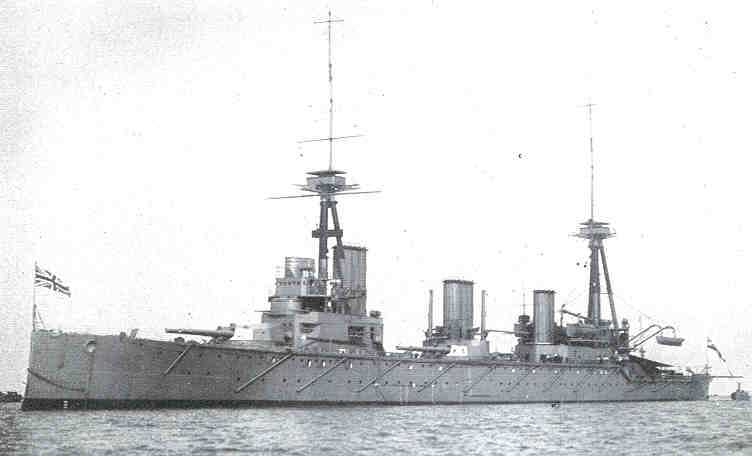
A year previously (May 13th, 1915) nine Waterford men died when H.M.S. “Goliath” was sunk off Cape Helles on the Gallipoli Peninsula by two Turkish-German torpedoes, taking 570 of the 750-strong crew to the bottom. They were Michael Flynn, James Flynn, Thomas Keohan, James Mason, Michael Power, William Power, Patrick Sweeney, James Walsh, and George Waters.
On November 1st, 1914, Arthur Bellman and John Sullivan were killed when H.M.S. “Monmouth” went down under German gunfire, with no survivors, during the Battle of Coronel off the Chilean coast.
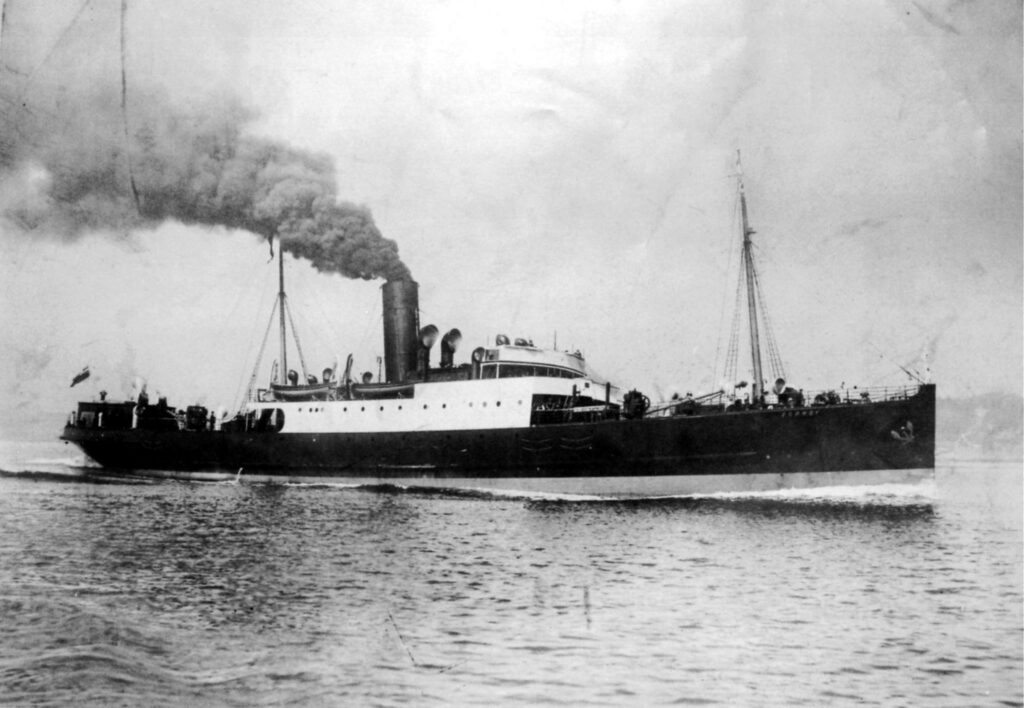
However, by far the worst week for local maritime casualties occurred in late 1917 and it was among the civilian Mercantile Marine. On December 16th the S.S. “Formby” – a ship owned by the Clyde Shipping Company and trading out of Waterford – was sunk during a fierce storm in the Irish Sea with the loss of all 27 hands.
As described by Tides and Tales author and blogger Andrew Doherty in a comprehensive post about the dual disasters, family members waited forlornly at the Clyde Shipping Offices on the Quay in Waterford for news over Christmas. The wreck was never located.
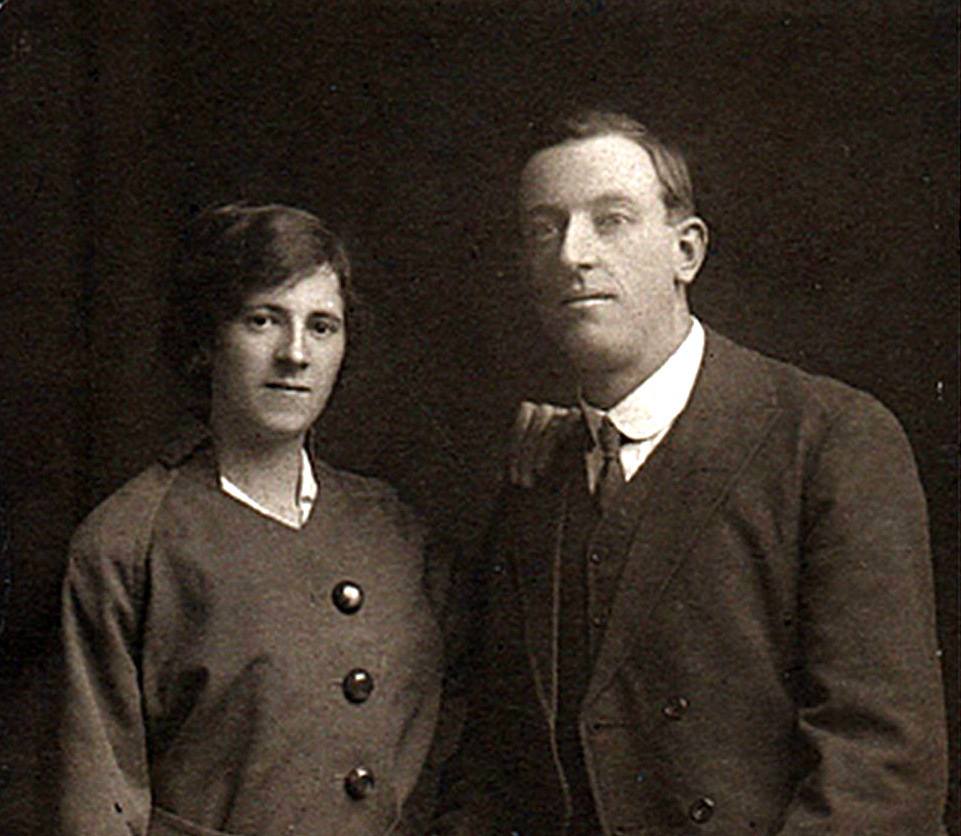
Those Waterford people who died were Edward Burke, John Burns, Maurice Butler, George Carpendale, James Clawson, Thomas Coffey, Thomas Condon, Patrick Doyle, John Hayes, Edward Hennessey, John Hurley, Thomas Keating, John Kiely, John Lemmon, William Lumley, James Manning, John McGrath, Charles Minards, John Moir, James Morrissey, Richard Murphy, John O’Brien, David O’Connell, John Sullivan, John Walsh, Patrick Walsh, and a Stewardess called Anne O’Callaghan.
Aged 52, and from St Joseph’s Terrace, Green Street in the City, Anne’s body was washed ashore near Milford-on-Sea. She was identified by a badge of the Sacred Heart, on the back of which she’d written her name and address.
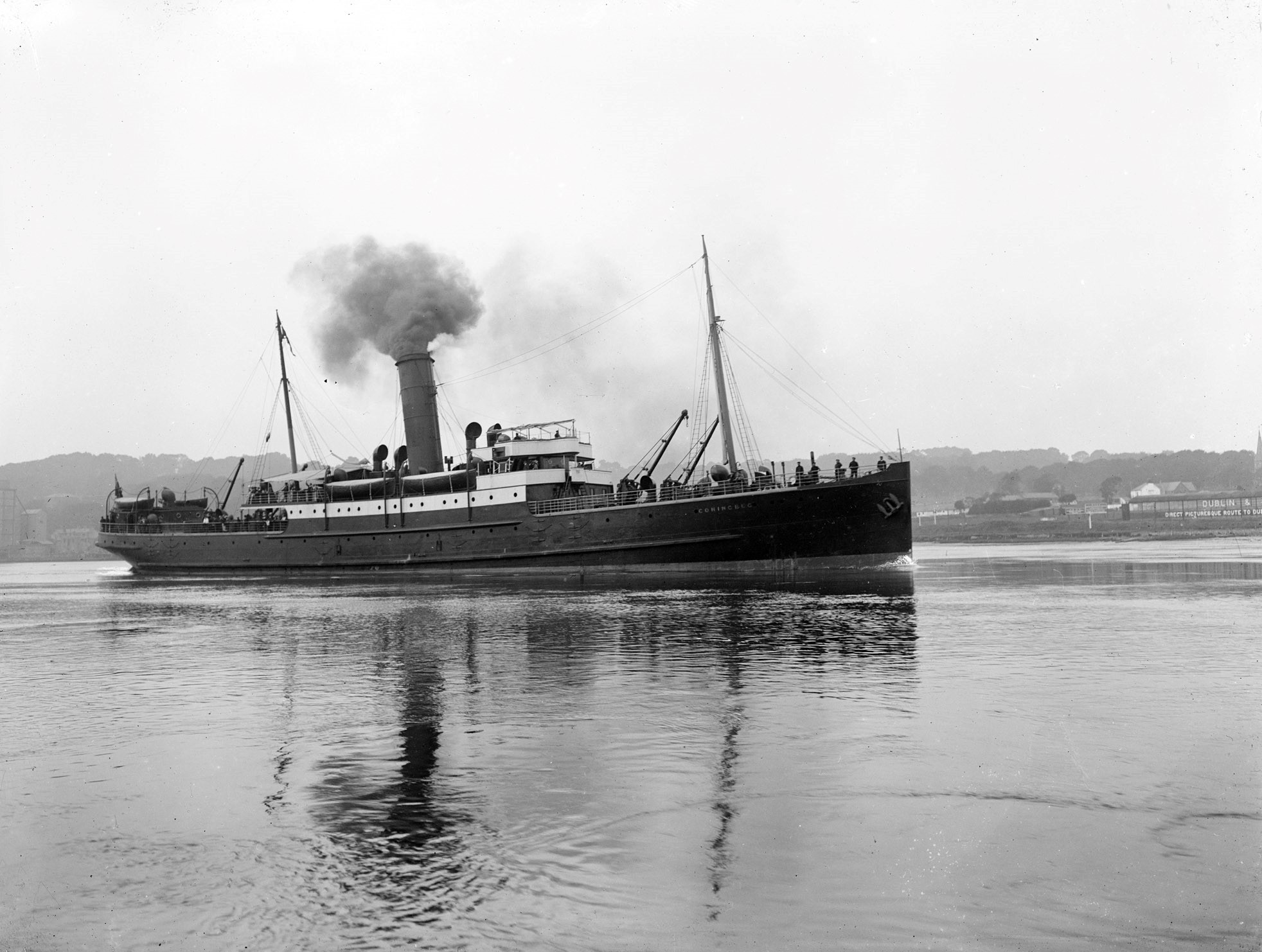
To add to this terrible toll, two days later the Glasgow-registered S.S. “Coningbeg”, owned by the same company and also trading out of Waterford, was returning from Liverpool when it was torpedoed and sunk with the loss of its entire crew, including 34 Portláirge men, namely: Michael Barry, Patrick Brown, William Cahill, David Cleary, John Chestnutt, Laurence Comerford, Patrick Cullen, Walter Cullen, Thomas Dobbyn, William Dower, Martin Eustace, Kiernan Grant, Thomas Griffin, Patrick Hennessey, Nicholas Hughes, Edward Hunt, James Keane, Richard Kehoe, Donald Livingston, Joseph Lumley, Thomas Meany, John McCarthy, Michael McCarthy, Edward Nagle, Andrew O’Brien, Thomas Pender, Michael Phelan, Patrick Quinlan, Patrick Sullivan, James Wall, Patrick Wall, Patrick Walsh, Stephen Whitty, and Thomas Wixted.
Most of these were merchant seamen; the majority fathers with young families. The full list of individual incidents and casualties involving seafarers from Waterford during The Great War is long. Suffice to say each death left an ocean of loss in its wake at home – though hundreds of these people have no known grave.
Thomas McGrath from Waterford City was one such sailor. Leading Seaman with the Royal Navy Reserve, he was awarded the Distinguished Service Medal on June 27th, 1917. Tragically, he would never collect it. Three weeks later (July 20th) the H.M. Trawler “Robert Smith” disappeared in the Atlantic, with no survivors. The honour was presented to his widow Annie, mother of Tommy’s seven-year-old son, back in the poignantly-named Waterside.
THIRTEEN OTHER TRAGEDIES
The following are among the other incidents and casualties suffered by ‘Great’ wartime seafarers from Suirside:
- Waterford-born Edward Carew, 28, a Sapper with the Royal Engineers Corps, died on October 11th, 1918, with the sinking of the R.M.S. “Leinster”, the City of Dublin Mail Steamer torpedoed by a German U-Boat in the Irish Sea. Over 500 lives were lost.
- Boatswain Thomas Power, 29, from Manor Street was one of around 10 men who died when the S.S. “Conargo” came under submarine attack off the Calf of Man in the Irish Sea on Easter Sunday, March 31st, 1918. Some crew escaped in lifeboats to Dublin and Holyhead.
- Twenty-one-year-old John Henry Moir of Lower Newtown was a Fourth Engineer Officer when he died on March 22nd, 1917, after the S.S. “Stuart Prince” was sunk by a German sub 85 miles NW of Mayo with the loss of 20 men.
- On January 25th, 1917, Royal Naval Reserve Seaman John Fleming, from Lower Dunmore East, was on the armed merchant cruiser H.M.S. “Laurentic” when she hit two German-laid mines near the mouth of Lough Swilly, NI, in awful conditions. Of the 470 people on board, 350 died, including his colleague, Seaman Thomas Quinlan, 34, from Ballymacaw.
- Able Seaman James Flynn, 28, from Dunmore was among 27 killed when the S.S. “Australdale” (Brisbane) was torpedoed and sunk by a German sub in the Mediterranean Sea while bringing coal from Wales to Gibraltar on October 19th, 1914.
- Originally from The Glen, John Grant, a Refrigerator Greaser, was one of 44 crew killed when the S.S. “Ausonia” (Liverpool) was torpedoed and sunk by the Germans while on voyage from Montreal on May 30th, 1918.
- Aged just 17, William Hayden, Ferrybank and Michael Hennessy, 20, from Thomas Hill, were both serving as Able Seamen when the pitwood-ferrying S.S. “Lough Fisher” was shelled and sunk by a German sub 12 miles off Helvick Head on March 30th, 1918. Thirteen crewmen died.
- Aged 50, John Hoolahan of Rockshire Lodge, Ferrybank, was a Fireman and Trimmer on the Canadian RMS “Royal Edward” when it was sunk by a torpedo while carrying Commonwealth troops off Greece on August 13th, 1915. He and at least 934 others were lost, including 17-year-old Trimmer, Christopher Power, from Waterford; Sailor William Joseph Nolan, 39, from St Alphonsus Road; and Able Seaman William Kinsella, 52, Newtown Hill.
- Boatswain John Stafford, 39, from Mount Sion Avenue, and Able Seaman Morgan Lawlor, 43, of Upper Ferrybank, were among 32 crew killed when the S.S. “Lorca” (London) was torpedoed by a German sub on November 15th, 1916, while taking a cargo of timber to Calais.
- Another Ballytruckle victim was Royal Navy shipwright Thomas Kennedy, 40, who left a widow and six children when the H.M.S. “Formidable” was torpedoed in the English Channel on New Year’s Day, 1915, claiming 347 crew.
- From Cahir, Fenor, William Nolan, 28, a Leading Seaman with the Royal Naval Reserve, was one of two killed when the S.S. “Euterpe” suffered torpedo damage off Crete on March 1st, 1917.
- Fireman and Trimmer, Michael Barry – born in Tramore but living in Carrickbeg – was on service aboard the British Merchant steamer Haulwen when it was torpedoed without warning by a German sub while en route from Montreal to Manchester on June 9th, 1917. He was 52. Patrick Lannigan, 27, from Spring Gardens, was also among the four men who died in the sinking.
- On March 1st, 1918, Pat O’Dwyer, aged 18, of Crobally, Tramore – a Trimmer with the Mercantile Marine Reserve – was among 49 who died when the HMS “Calgarian” was sunk by a U-boat off Rathlin Island, Northern Ireland. Also lost was another teenage Trimmer, John Keane from Ballytruckle, aged just 17.
*All members of the Mercantile Marine unless stated.
Top photograph: The ill-fated S.S. “Coningbeg”, pictured sailing into Waterford harbour from Adelphi Quay in August, 1913. Thirty-four locals would later lose their lives when Germans torpedoed it during WWI. [National Library of Ireland]
Post Comment