Maurice recalled his Kilmeaden upbringing
The late Maurice Connolly wrote a lovely nostalgia piece for me back in 2012 about his upbringing in Kilmeaden. It was intended for publication in a local newspaper I had at the time but the Hinterland went by the wayside before the Wexford-based playwright and novelist could grace its pages. After a long and frustrating search, I tracked down the original which I’d kept in one of those safe places you never think of looking in. Thought lost but thankfully recovered… priceless, as was Maurice’s constant encouragement. [Jamie O’Keeffe]
Kilmeaden in the Rare Old Times
Cullinagh is the townsland where my former home is situated. I spent all of my youth, in the forties and fifties, growing up in the area. By no means is the following meant to be a historical account. (Michael Carberry and John Gough both penned a history of Kilmeaden). What I shall try to do is to give young people a flavour of what life, generally speaking, was like back in that bygone era. Also, it might give elderly people an opportunity to reminisce.
For a start Kilmeaden was in the heart of the country back in those days – not like now where it is, more-or-less, a suburb of the City. Apart from the main Waterford-Cork road and the Portlaw-Carrick-on-Suir road, all the other roads in the area were stone and gravel covered, frequently cut-up and potholed alter heavy rain. The horse and cart was used for transporting the stone. The county council workers toiled manfully with limited equipment. Like most other occupations, the work was hard and the wages were small.
The public transport to Waterford was provided by CIÉ and Bowers Bus Service. Bowers operated from Piltown, crossing the old Fiddown toll bridge and taking in Portlaw village en-route. For some reason Bowers was always the most popular. We got on the bus at Kilmeaden station and it continued its ponderous journey to the city, chock-a-block with passengers, cigarette smoke billowing all over the place. I remember the two pleasant bus drivers, Andy Merry and Dick Cahill from Fiddown. Back then a passenger train service operated also, stopping at Kilmeaden station. My brother and I often availed of this service to travel to town on Saturdays. The thrill of watching the powerful steam engine approaching. What a beautiful trip it was, down by Mount Congreve, along by the banks of the Suir. The fare was six pennies. In Waterford there was a ferry-boat service across the Suir which could, if one wished, be availed of for two pence.
Religion was a great driving force back then. In my schooldays Father Murray was the parish priest, having his residence in Ballyduff. The two curates resided in Portlaw. Father Murray was a laid-back type of individual who didn’t believe in rushing through the mass – it often took over an hour. If Fr. Murray was preaching and someone coughed he’d wait until the person was done coughing before continuing. Cars were just starting to make inroads in the early fifties. Father Murray had one but he didn’t believe in stopping before crossing main roads. He used fly across the main road at Matthews Cross looking neither left nor right. If Father Murray was a marathon man saying the mass then one of the curates, Fr. McGrath, was a sprinter; he completed the mass ritual in twenty minutes flat. The mission when it came about was a big event in the parish, with some fiery missioners frightening the living daylights out of the congregation. People, in general, believed absolutely in the afterlife. Another custom then was the priest reading publicly off the alter how much each family contributed towards the Easter dues.
Generally, growing up, most of our playmates were from the immediate area. They were the Gambles, the Gahans and the Whites from Cullinagh; from Fairbrook – separated by the railway line – there were the Hearnes, Jamsie Power, the Falconers, the Walshs and the Brownes. We indulged ourselves in many forms of recreation. Rabbit hunting with terriers was one, fishing in the Dawn river was another. The Dawn was teeming with trout back in those days. We played in the disused Fairbrook woollen mills; collected mushrooms in early August mornings, wild strawberries grew in abundance on mossy banks.
Around and about the railway line was one of our favourite play areas. I vividly recall the passenger trains heading for Rosslare, transporting the emigrants from Kerry, Cork and West Waterford. Those trains were all packed, with men and women standing in the corridors. We weren’t aware of the sad significance back then. We waved our hands and lots of those lonely people waved back. It’s well documented that some never again returned home. The Hearne, Walsh and Brown families sadly emigrated from Fairbrook.
Up under The Glen we dammed the river, making our own swimming pool. We all learned to swim under the excellent tutelage of Tommy Massey, who worked for the CIÉ. We even erected our own diving board. However, on a few occasions the dam was breached by concerned parents fearful of a drowning. The land bordering our swimming area was owned by Mikey Walshe, a small rotund man, with a moustache. Mikey was renowned as a perfectionist, where everything on his farm had to be done exactly right. When he opened a field for ploughing the sod had to be as straight as a rifle barrel. He always liked to be the first in the parish to cut a meadow.
MOVIE SCENES
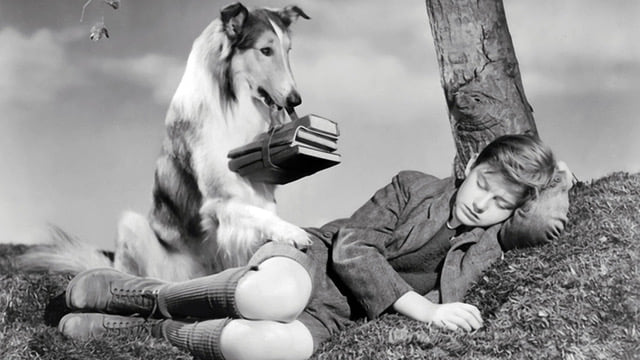
Memories of Kilmeaden life in the forties and fifties come flooding back. The Hayes’ tent in Lacey’s Field showing the first motion pictures any of us ever saw. I remember some of the film titles – Rin Tin Tin, Lassie Come Home, The Black Ace. Later Jimmy Gibbs and John Joe Walsh showed films in the Old School (beside ‘Lacey’s). Plays and dances were also held in the Old School. A few performers in those travelling road-shows later appeared in the TV series The Riordans.
There were several pubs in Kilmeaden back in that era, all doing good business, Adjoining the main road you had The Sweep, DeLacey’s, Power’s (The Long Haul), and not forgetting Haughton’s, a mile further on. Around the station area there was Dick Kelly’s and Power’s, directly opposite the Garda barracks. Power was also the name of the proprietor of another pub in Whelan’s Bridge. I vaguely remember my father buying me my first bag of crisps in DeLacey’s.
It’s often said that the law is an ass. It was definitely so in one respect back then: a law was enacted stating that a customer could spend two extra hours in a pub on a Sunday night if he were a traveller. Being classified as a traveller meant you had to live three miles from the pub. This resulted in some hilarious situations as one can well imagine. In certain borderline instances, the gardai had to measure the exact distance from pub to house. ‘After Hours’ drinking was a serious issue back then.
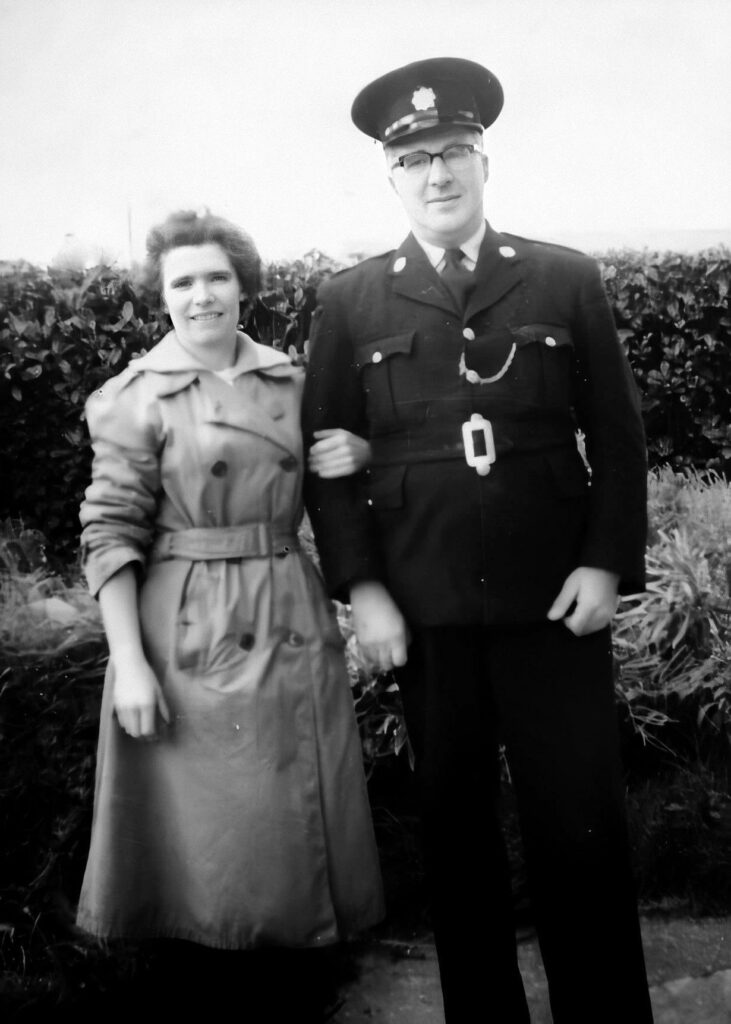
Growing up in the area the same three gardai appeared to be a permanent fixture. They were Sergeant Whelan, Garda McCarthy and Garda Daly. The three members of the force all got on well with the local denizens. Sergeant Whelan was an easy-going, pleasant, pious individual. They certainly weren’t run off their feet as regards crime. There was the rare house break-in which was then the main topic of conversation for some time. Having no light on one’s bicycle resulted in prosecution and usually a half-crown fine.
As mentioned, after-hours drinking was another offence that was rigorously pursued. When the period is analysed it’s amazing how peaceful the countryside was, considering the violent turmoil the country had experienced not all that many years previous. Politics and elections were hot topics, no doubt, with Fianna Fail and Fine Gael inclined to resurrect the old bitterness. Having a dog license was also an important issue back in those times. Farmers could also end up in court for having ‘noxious’ weeds on their land.
There was no electricity until the mid-fifties. Prior to that ghosts were reputed to be seen in all sorts of places. People believed fervently in the supernatural. Most people were terrified of travelling the roads on their own after dark. Certain people were renowned for telling ghost stories. The banshee was a common sighting – an old woman keening as she combed her hair. If the banshee was heard it meant an imminent death in the area. A good raconteur of ghost stories, on a dark wet night, with the wind howling outside, could hold an audience spellbound in fear.
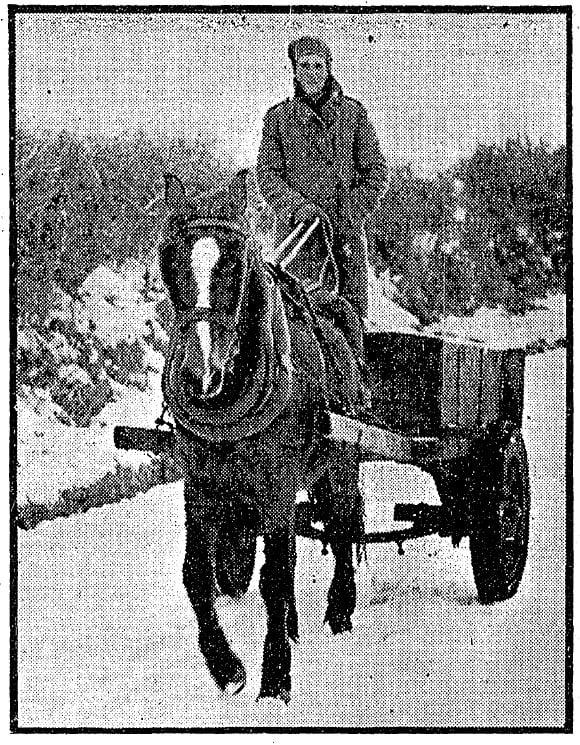
Agriculture was the big industry then. There was precious little else. Tractors hadn’t as yet made any impact so the horse was all-important. Saving the crops and looking after livestock was all done manually. The milk was delivered to the creamery by horse and cart. My father and our near neighbour, Richard Gamble, were the only suppliers in Cullinagh. I’ve heard many stories about Jack Connolly’s dray cart being loaded down with bags of coal on the return journey for the residents of the Mill Street. Apparently, a great deal of banter was indulged in, with the air often turning slightly blue. After all, my father had been in the trenches for four years. However, he didn’t get it all his own way.
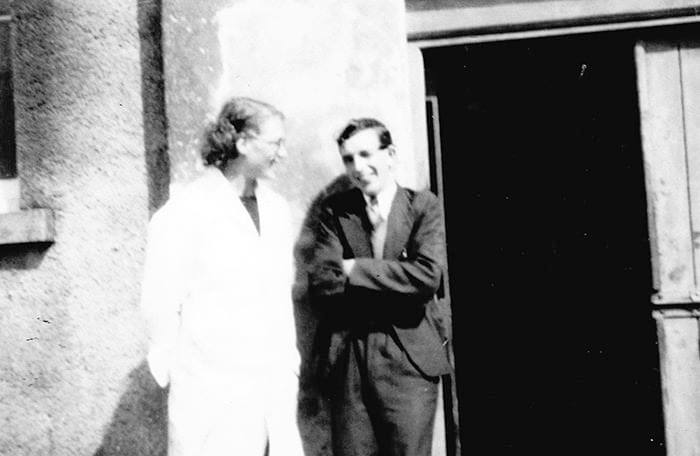
The creamery shop was a busy place with the four shop assistants kept on their toes. The staff were all male – Tommy Walsh, Tommy Power, John O’Keeffe and Martin Regan. Tobacco was rationed for some years after the war. Many’s the row erupted in the shop when some customers were told there were no cigarettes or plug tobacco available. The four beleaguered men behind the counter were often accused of favouritism. In fact, they would have needed the wisdom of Solomon to keep everyone happy. So desperate were people for cigarettes that they started to smoke used tea leaves amongst other concoctions.
On New Year’s Day in 1947, the start of a tremendous, record snow blizzard hit the country. The resulting drifts covered the roadside fences. The snow was unrelenting. Just before the snow started the sky got very dark and I remember looking out the window in amazement at a multitude of birds heading towards the sea; even reclusive birds like woodcock, not normally seen in open spaces. The sight was strange and uncanny. The grinding cold, desolation and general misery was to last till St. Patrick’s Day.
Hurling was the dominant sport during those years. The Ballyduff team trained in Stephenson’s Field, Newtown. The exchanges, even in practice, were pretty rugged. There were some ferocious matches back then – especially between neighbouring parishes – where no quarter was asked or given. A full forward was considered useless unless he periodically buried the opposing goalkeeper in the back of the net.
The Dawn Rovers soccer club came into existence in 1948. The founders of the club included Paddy Brown, Michael Shanahan, Tom Foran, Peter Nolan, Jonny Power (the Priest), amongst others. The ridiculous GAA ban on foreign games was then in vogue so players were prohibited from playing both codes. You had the farcical situation where vigilante committees monitored the attendance at ‘foreign game’ dances.
There were some great characters in the Kilmeaden area back then, with lots of interesting stories that could be told. Someone else might juggle the memory bank and continue this narrative better than me. Hopefully I’ve thrown a small glimmer of light on that era.
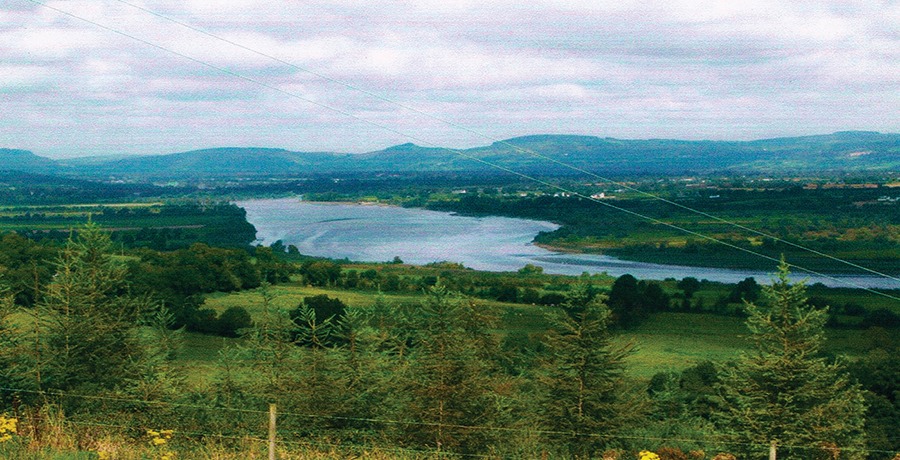
Top image: early colour photo of the River Suir from Gortaclode. [Lynch Family Collection]
Post Comment